

The matchup between the Buffalo Bills and the Atlanta Falcons was one of the most anticipated games of the NFL season. Both teams brought strong rosters, skilled quarterbacks, and talented offensive and defensive units. Fans and analysts were eager to see how the teams’ strategies would match up on the field. This article provides a detailed breakdown of the buffalo bills vs atlanta falcons match player stats, covering individual performances, team stats, and game-changing moments. By examining these numbers, we can understand not just who won, but why they won.
Buffalo, led by quarterback Josh Allen, is known for explosive plays and a dynamic passing game. Atlanta, with Michael Penix Jr. at quarterback and Bijan Robinson leading the rushing attack, relies on a balanced offense and strong defensive play. The clash of these styles promised an exciting game, and the stats show exactly how the match unfolded.

Game Overview: Setting the Stage
The Buffalo Bills vs Atlanta Falcons game was a high-stakes encounter. Buffalo entered with a strong offensive record but faced challenges from Atlanta’s well-rounded defense. Atlanta, meanwhile, had a young but explosive roster, capable of scoring quickly and controlling the pace.
The final score of the matchup was Falcons 24, Bills 14. From the opening kickoff, Atlanta established momentum with strong rushing and efficient passing. The Bills struggled to keep up, with turnovers and defensive pressure affecting their scoring drives.
The Falcons gained 443 total yards, while Buffalo managed only 291. On the ground, Atlanta rushed for 210 yards, compared to Buffalo’s 134 yards. These numbers highlight Atlanta’s dominance in controlling the clock and sustaining drives.
Suggested for You : Miah Harbaugh’s Contributions to Family Life and the Coaching Community
Quarterback Battle: Air Game Analysis
Falcons: Michael Penix Jr.
Michael Penix Jr. led Atlanta with a precise passing game. He completed 20 of 32 passes for 250 yards, threw 1 touchdown, and managed the game efficiently. His distribution of the ball to multiple receivers kept Buffalo’s defense guessing. Penix’s ability to extend plays and find open targets was key to Atlanta’s offensive success.
Bills: Josh Allen
Josh Allen completed 15 of 26 passes for 180 yards, threw 2 touchdowns, but also had 2 interceptions. The Bills’ offensive line struggled to protect Allen, who was sacked 4 times, disrupting drives and reducing scoring opportunities. Despite his athletic ability and strong arm, turnovers and pressure prevented Buffalo from fully exploiting their passing game.
Analysis: The passing stats clearly show Atlanta’s edge. Penix’s higher completion percentage and fewer mistakes allowed Atlanta to sustain drives, while Allen’s interceptions and sacks stalled Buffalo’s offense. Passing efficiency often determines the flow of the game, and Atlanta’s quarterback executed better under pressure.
Running Game: Ground Domination
Falcons Rushing Stats
Atlanta’s rushing attack was led by Bijan Robinson, who had a standout performance with long, explosive runs, including an 81-yard touchdown. Robinson consistently broke through Buffalo’s defensive lines, helping Atlanta maintain possession and control the clock. The team totaled 210 rushing yards, showing that their ground game was both productive and consistent.
Bills Rushing Stats
Buffalo’s running attack relied on James Cook, who gained 87 yards, and Josh Allen, who added 42 yards. Other rushers contributed modest yardage, bringing Buffalo’s total to 134 rushing yards. While there were individual highlights, Buffalo’s rushing game lacked the balance and explosiveness of Atlanta’s attack.
Analysis: The rushing stats reveal why Atlanta controlled time of possession. Sustained drives through the ground game allowed the Falcons to open opportunities for passing plays, forcing the Bills to play from behind.
Offensive Standouts: Players Who Shined
Falcons Offensive Highlights
- Bijan Robinson: Explosive runs, long touchdowns, and consistent first downs made him the central figure of Atlanta’s offense.
- Drake London: Reliable target in the passing game, gaining critical yards and helping convert third downs.
Bills Offensive Highlights
- Josh Allen: Threw two touchdowns, showing his skill and leadership despite turnovers.
- Ray Davis: Scored a key touchdown, highlighting his importance as a receiver in clutch moments.
Analysis: While both teams had standout performers, Atlanta’s offensive stats show a more balanced and efficient attack, giving them the edge in total yards and sustained scoring opportunities.
Defensive Battle: Who Made the Stops?
Falcons Defense
Atlanta’s defense forced two interceptions and recorded four sacks, consistently pressuring Josh Allen and the Bills’ offensive line. Their ability to stop drives and create turnovers was a critical factor in the Falcons’ victory.
Bills Defense
Buffalo recorded two sacks but failed to create turnovers or consistently halt Atlanta’s rushing attack. Atlanta’s balance between pass and run offense kept the Bills’ defense off balance.
Analysis: Defense often decides close games. Atlanta’s ability to pressure Allen and limit Buffalo’s big plays made the difference. The defensive stats highlight how creating turnovers and sacks can swing momentum in a game.
Special Teams and Field Position
Special teams play can change a game in subtle ways. Atlanta executed punts and kickoffs effectively, ensuring favorable field position throughout. Buffalo’s special teams were solid but did not create game-changing opportunities. Effective special teams contributed to Atlanta controlling the game flow, supporting both offense and defense.
Turnovers and Game Flow
Turnovers were critical. Buffalo had two interceptions, which halted scoring drives and gave Atlanta excellent field position. The Falcons committed no turnovers, allowing them to maintain control and dictate the pace.
Atlanta’s strategy involved mixing rushing and passing to stay ahead early. Buffalo tried to mount comebacks, but turnovers and defensive stops prevented them from gaining momentum.
Team Stats Breakdown
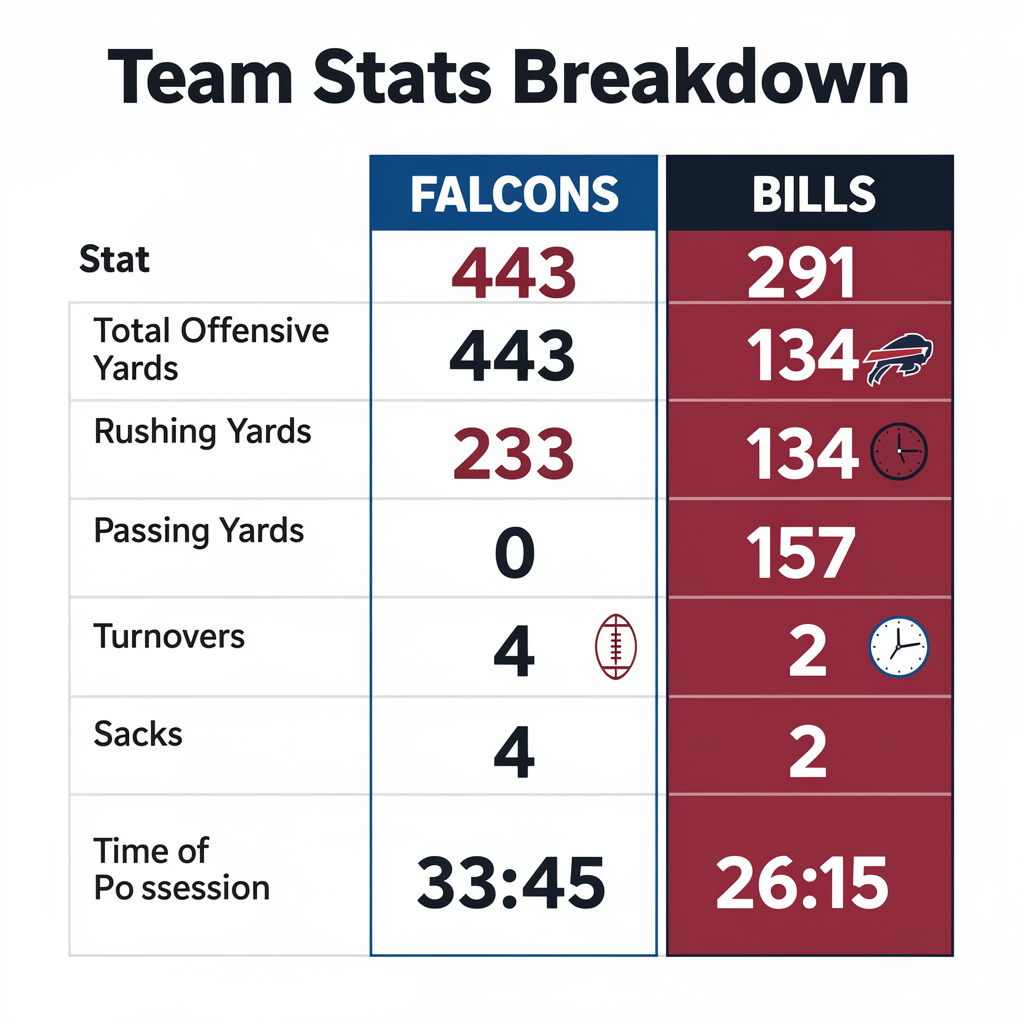
Analysis: Atlanta’s superiority in total yards, rushing efficiency, and ball security helped them control both the clock and the scoreboard. These numbers explain the Falcons’ ability to sustain drives and limit Buffalo’s scoring chances.
Key Plays That Defined the Game
- 81-yard run by Bijan Robinson: Set the tone early and gave Atlanta momentum.
- Interception by Falcons in the second quarter: Stopped a Buffalo drive and shifted momentum.
- Third-quarter touchdown pass from Josh Allen to Ray Davis: Only Buffalo scoring pass that significantly impacted the game.
- Sacks by Atlanta defense in key third downs: Forced Buffalo to punt and slowed their offensive rhythm.
Each of these plays is reflected in the player stats, showing how individual performances directly shaped the game outcome.
Fan Reactions and Analysis
Fans were highly engaged throughout the game. Atlanta supporters cheered Bijan Robinson’s runs and Drake London’s receptions. Bills fans were frustrated with turnovers but praised Josh Allen’s effort. Social media discussions focused on how stats tell the story beyond the final score, highlighting standout performances and missed opportunities.
Future Implications for Both Teams
Buffalo Bills
The loss highlighted areas for improvement:
- Protecting the quarterback to reduce sacks and turnovers.
- Improving the balance between passing and rushing.
- Capitalizing on scoring opportunities in red-zone situations.
Atlanta Falcons
The win showcased strengths:
- Balanced offense with explosive rushing and reliable passing.
- Effective defensive pressure.
- Ability to maintain control of the game with no turnovers.
Both teams will use these buffalo bills vs atlanta falcons match player stats to plan strategies for future games, identifying key strengths and weaknesses.
Key Takeaways
- Atlanta outgained Buffalo in total yards and maintained strong time of possession.
- The Falcons’ balanced offense kept drives alive and opened passing opportunities.
- Turnovers were critical, with Buffalo’s interceptions hindering scoring chances.
- Atlanta’s defense applied constant pressure, forcing mistakes and limiting Buffalo’s offense.
- Individual performances, particularly from Bijan Robinson and Drake London, played a pivotal role.
These stats demonstrate how Atlanta controlled both the offensive and defensive aspects of the game, leading to a decisive victory.
Frequently Asked Questions
1. Who were the standout players in Bills vs Falcons?
Bijan Robinson and Drake London led Atlanta’s offense, while Josh Allen and Ray Davis were key for Buffalo.
2. How did rushing yards compare?
Atlanta rushed for 210 yards, while Buffalo had 134 yards.
3. Did turnovers affect the game?
Yes. Buffalo had two interceptions, while Atlanta committed none.
4. How did the quarterbacks perform?
Michael Penix Jr. completed 20 of 32 passes for 250 yards. Josh Allen completed 15 of 26 passes for 180 yards with 2 interceptions.
5. Where was the game played?
The game took place at Mercedes-Benz Stadium in Atlanta.
6. What was the total yardage difference?
Atlanta outgained Buffalo 443 yards to 291 yards.
7. How did defense impact the game?
Atlanta forced turnovers, recorded sacks, and limited Buffalo’s big plays, controlling momentum.
